Brent Harp: Bob Loveless protégé keeping the functional knife-making heritage alive
By JIM MATTHEWS
www.OutdoorNewsService.com When Riverside knife-maker Bob Loveless passed away a year ago, he left behind a legacy that will live on as long as people carry knives. While most Loveless knives are now in collector’s hands, sometimes fetching six-figure prices, Loveless designed his knives as ergonomic tools, high-quality pieces of equipment to be carried and used by hunters, outdoorsmen, military, and law enforcement. As he aged, he groused that most ended up in velvet-lined boxes instead of in the hands of hunters and cowboys.
Loveless willed his shop and business to Jim Merritt who had worked side-by-side with Loveless for 30 years as his partner and continues to make knives that carry the Loveless name, and Merritt is pleased to note that at any knife show in the country, you will see more copies of Loveless designs than any other style of knife.
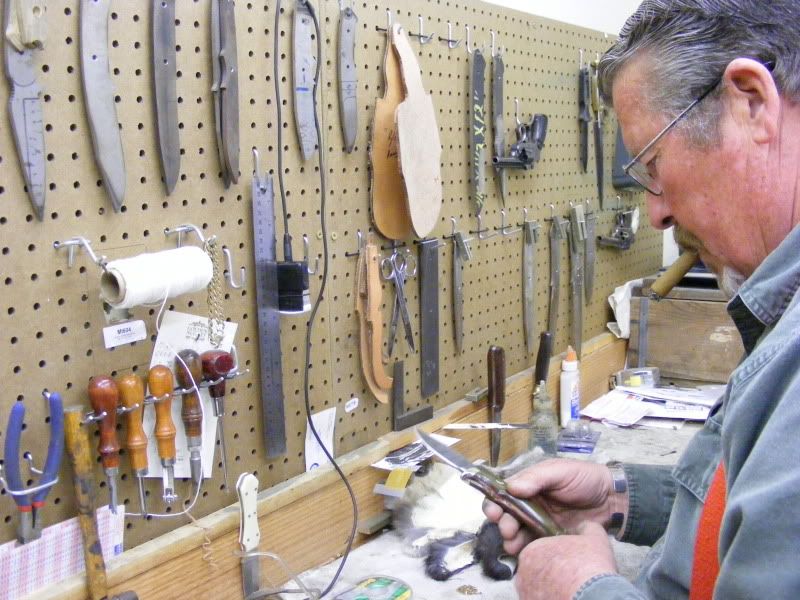
Brent Harp is one of the few Loveless protégés, who was actually trained in Loveless’ shop by Loveless and Merritt. Merritt said only two knife makers ever worked in the Loveless shop full time: Merritt who has been there 30 years and well-known Utah knife maker Steve Johnson, who was in the shop full time for two years. Harp, who was a police detective for the Redlands Police Department, when he first met Loveless and Merritt spent weekends and weekday evenings with Loveless, learning each step in the knife-making process.
Harp met Loveless in 1986 when he was trying to learn how to heat treat steel to make his knife blades harder and hold a better edge. He’d been self-taught to that point, and found Loveless in a knife-making book and called him out of the blue.
“I didn’t know who he was, but I called him and told him I was a half-assed knife maker who’d been using leaf springs, but now was trying to use tool steel but didn’t know how to heat treat it,” said Harp.
Harp learned he and Loveless had a common beginning. Loveless made his first knife from a Packard leaf spring, and Loveless took the time to explain how Harp could heat treat knives using briquettes and a barbecue. He then told Harp he wanted to see his knives when they were done.
A couple of weeks later Harp called Loveless back and asked if he still wanted to see the knives, and Loveless invited him over to the shop. After talking for two hours and a tour of the shop, Harp said Loveless looked at his knives and told him, “These knives are nice, but I hope you know that when it comes to making knives you’re in elementary school. How would you like to go to college?” Harp was interested.
“Loveless said he normally charged $1,000 a week to teach knife-making, but all he wanted from me was my time. If I gave him my time, he’d teach me how to make fine knives,” said Harp.
That began an apprentice process that went on several days a week for two years and continues to this day with Harp and Loveless Knives. (Merritt said Harp stopped by the shop to pick his brain this week on a nuance of knife making.)
“I was like a sponge soaking up as much as I could, and for about two years I learned about proper equipment, tools, and methods from two of the finest knife makers in the world -- R.W. Loveless and Jim Merritt,” said Harp.
When it was time for Harp to put together his own full-fledged knife-making shop, it was again Loveless who stepped in to help him, selling him a Loveless-customized piece of equipment that does everything but buff and drill and giving him some tools that Harp uses every day.
But Harp said it was more than the knife-making lessons that have stuck with him. After he’d been under the tutorship of Loveless and Merritt for some time, he decided to make three Loveless-design utility knives. Pouring his heart and soul and a lot of hours into the three blades, Harp was proud of the knives after the final buffing, and wanted to show them off to Loveless.
“When I went to show Bob, he was in the leather room of his shop and I announced myself because I didn’t want to get shot -- Bob always carried a gun,” said Harp. “I laid the knives on his bench and he stopped to look at them. I was awaiting his approval, and he picked them all up and threw them over his shoulder down the hallway,” said Harp.
Loveless watched Harp’s reaction, and quickly assured him two things: First, that if the knives were any good, it probably didn’t hurt them. Second, Loveless looked Harp in the eye and told him, “If you’re going to make knives and sell them, you can’t fall in love with them.” It was a lesson Harp has never forgotten.
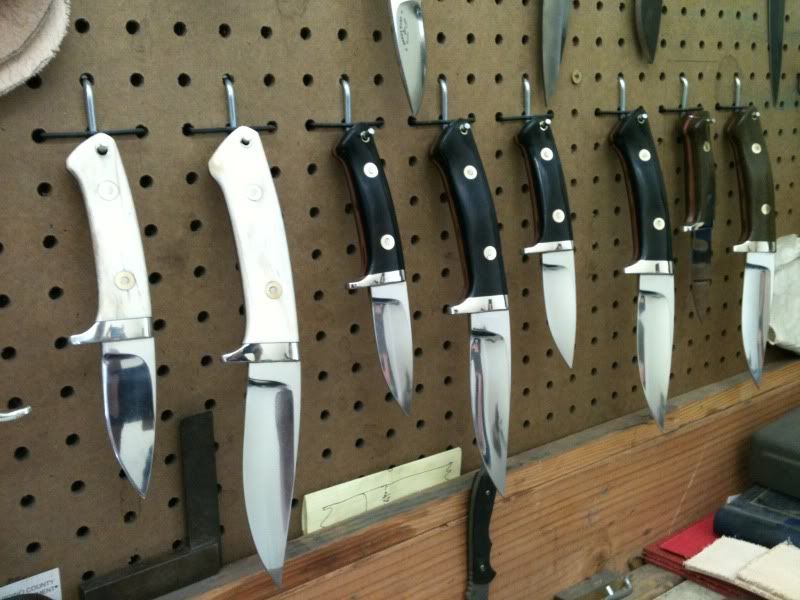
“You still fall in love with a knife when you do a really good job on it, but you get over it,” said Harp, who has probably only sold about 300 knives, and it has only been the in the last two years that he has really started making them in any quantity from his new home shop in Perris near Lake Mathews.
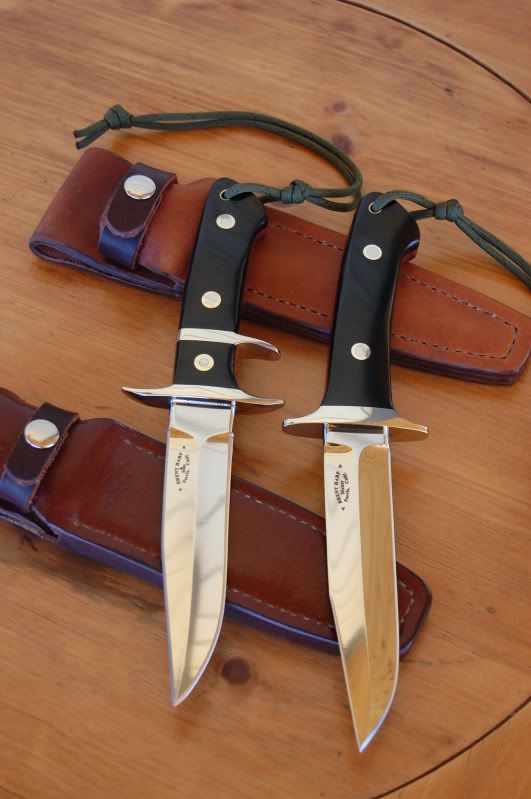
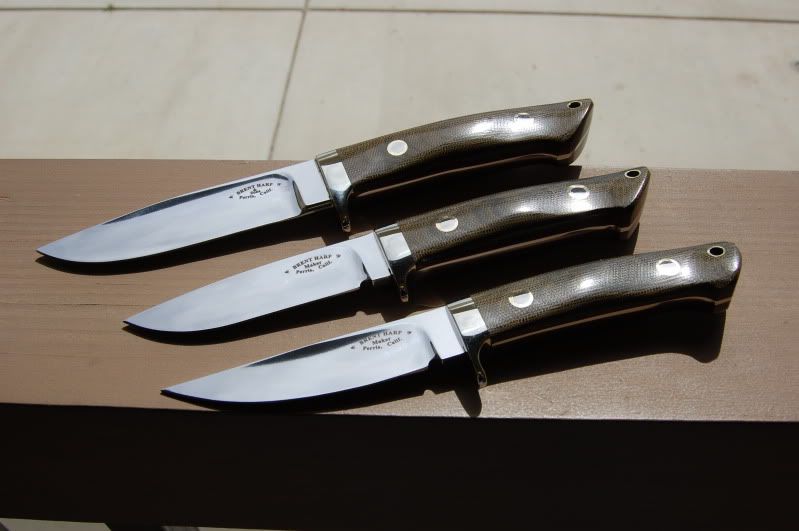
And now he’s starting to work on his own designs. A family member in Utah wanted a skinning/caping knife with certain design features that make the task easier and more efficient. Harp did a drawing, a template, and then a finished knife. It looked and felt good in the hand and worked well in the field, a passing grade in the Loveless test. When he showed the blade to Jim Merritt, Merritt told him is was almost just like a caper they made in the Loveless shop, a blade design Harp had never seen.
“I’m even thinking like Jimmy and Bob,” said Harp laughing.
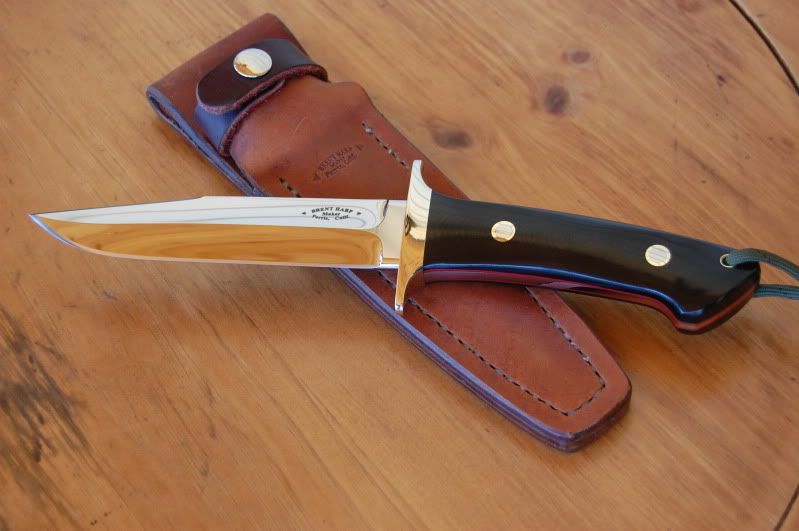
If you tell him his knives look like a Loveless, he takes that as a compliment, and will point out how “the Harp handle” is slightly offset to fit in the hand perfectly for a working knife, an evolution of a Loveless design that is about function first. He’s pretty sure Bob Loveless would approve.
Harp said he’s going to keep making knives in the Loveless tradition, with impeccable fit and finish wrapped in a functional design for people who intend to use his knives, and always with a tip of his cap to his friends and mentors who guided him down this path.
“Bob and Jim were always willing to share any information that I asked for -- there were no secrets. And Jim Merritt still helps me,” said Harp.
So what does Merritt say about Harp?
“He’s doing good knives,” said Merritt. “And he keeps getting better -- we all do.”




 Previous Topic
 Index
Index

